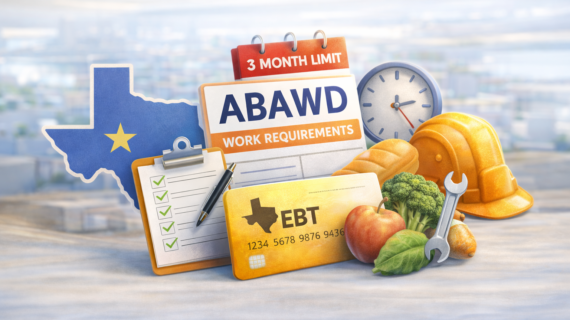
Understanding SNAP work requirements in Texas is essential if you receive or plan to apply for food assistance. Certain adults must meet employment rules to continue receiving benefits, especially those classified as ABAWD (Able-Bodied Adults Without Dependents).
This guide explains who must meet SNAP work requirements in Texas, what ABAWD rules mean, available exemptions, time limits, and how work participation affects eligibility.
If you are new to SNAP, review How to Apply for SNAP in Texas for a full overview of the program.
What Are SNAP Work Requirements in Texas?
SNAP work requirements are federal rules that require certain adults to work or participate in approved employment activities to continue receiving benefits.
Texas follows federal SNAP guidelines while administering the program through the Health and Human Services Commission (HHSC).
Who Must Meet Work Requirements?
Generally, adults between ages 18 and 52 without dependents must meet work requirements unless they qualify for an exemption.
These individuals are often referred to as ABAWDs.
What Is an ABAWD?
ABAWD stands for Able-Bodied Adult Without Dependents. An ABAWD is typically someone who:
- Is between ages 18 and 52
- Has no children in the household
- Is physically and mentally able to work
ABAWDs face stricter time limits if they do not meet work requirements.
ABAWD Time Limit Rules
ABAWDs may only receive SNAP benefits for three months within a 36-month period if they do not meet work requirements.
To continue receiving benefits beyond that period, they must:
- Work at least 80 hours per month, or
- Participate in an approved employment or training program, or
- Qualify for an exemption
What Counts as Work?
Qualifying work activities include:
- Paid employment
- Self-employment
- Job training programs
- Workfare assignments
- Volunteer work (in some cases)
Who Is Exempt From SNAP Work Requirements?
You may be exempt if you:
- Are under age 18 or over age 52
- Have a physical or mental limitation
- Are pregnant
- Care for a dependent child
- Are already working sufficient hours
- Receive unemployment benefits
If you receive unemployment, see Can You Get SNAP and Unemployment in Texas? for more details.
How Work Requirements Affect Benefit Amounts
Work requirements do not directly change your benefit amount, but failure to comply may result in losing eligibility.
Income from work may reduce your benefit amount depending on the limits outlined in SNAP Income Limits in Texas.
How to Report Work Hours
If you are subject to SNAP work requirements in Texas, you must report your work hours and provide verification documents such as pay stubs.
Learn how to update your case in How to Report Income Changes for SNAP in Texas.
What Happens If You Do Not Meet Work Requirements?
If you fail to meet work requirements and do not qualify for an exemption, your SNAP benefits may stop after the three-month limit.
You may requalify later by meeting work requirements again.
Can Work Requirements Be Waived?
In some situations, work requirements may be waived in certain geographic areas with high unemployment or during federally declared emergencies.
How Work Requirements Relate to Renewal
During renewal, HHSC reviews your compliance with work requirements.
See How to Renew SNAP Benefits in Texas for more details.
Frequently Asked Questions
Do all SNAP recipients have to work?
No. Only certain adults without dependents must meet ABAWD work requirements.
Can I lose SNAP if I quit my job?
Voluntarily quitting without good cause may affect eligibility.
Does part-time work count?
Yes, as long as total hours meet minimum monthly requirements.
Can students be subject to work requirements?
Students may have separate eligibility rules depending on enrollment and work status.
Final Thoughts
SNAP work requirements in Texas are designed to encourage employment while providing temporary assistance. Understanding ABAWD rules, exemptions, and time limits helps you protect your eligibility and avoid benefit interruptions.
If you are unsure whether work requirements apply to your situation, review your case notice or contact HHSC for clarification.