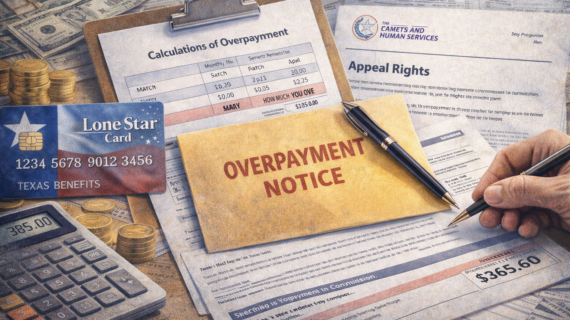
If you receive SNAP benefits in Texas and get an overpayment notice, it can be confusing and stressful. Many recipients are unsure why they received the notice, how much they owe, and what steps to take next.
A Texas SNAP overpayment notice means the state believes you received more benefits than you were eligible for. This does not always mean you did something wrong. Overpayments can happen due to administrative errors, delayed reporting, or incorrect information.
Understanding how overpayments work—and how to respond—can help you protect your benefits and avoid further penalties.
If you’re still learning how SNAP works in Texas, you may want to review this guide on Texas SNAP payment dates to better understand how benefits are issued and managed.
What Is a Texas SNAP Overpayment Notice?
A SNAP overpayment notice is an official letter from the Texas Health and Human Services Commission (HHSC) informing you that you received more benefits than you should have.
The notice typically includes:
- The amount of overpayment
- The time period involved
- The reason for the overpayment
- Instructions on repayment or appeal
This notice is important and should never be ignored.
Common Reasons for SNAP Overpayments
Overpayments can happen for several reasons, and not all of them involve fraud.
Unreported Income Changes
If your income increases and is not reported on time, your benefits may not be adjusted correctly.
Household Changes
Changes in who lives in your household can affect your eligibility.
Administrative Errors
Sometimes, the agency makes mistakes when processing your case.
Delayed Updates
If updates are reported late, benefits may be overpaid before corrections are applied.
To understand eligibility rules more clearly, you can also read about SNAP eligibility in Texas, which explains how benefits are calculated.
Types of SNAP Overpayments
Not all overpayments are treated the same. They are generally categorized into three types:
Agency Error
The mistake was made by the agency. Penalties are usually less severe.
Client Error
The overpayment happened due to incorrect or missing information from the recipient.
Intentional Program Violation (Fraud)
This involves knowingly providing false information to receive benefits.
The type of overpayment affects how the case is handled.
Do You Have to Repay SNAP Overpayments?
In most cases, yes. Even if the error was not your fault, you may still be required to repay the overpaid amount.
Repayment options may include:
- Monthly payment plans
- Reduction of future benefits
- Lump-sum payments
The repayment method depends on your situation.
What Happens If You Ignore the Notice?
Ignoring a SNAP overpayment notice can lead to serious consequences.
- Collection actions may begin
- Benefits may be reduced or stopped
- The debt may be referred for further enforcement
Many recipients underestimate how quickly issues can escalate. If you’re dealing with related problems, you may also want to understand how missed requirements affect benefits, such as in this guide on what happens if you miss a SNAP interview.
How to Respond to a SNAP Overpayment Notice
If you receive a notice, take action immediately.
Review the Notice Carefully
Check the amount, dates, and reason for the overpayment.
Verify the Information
Compare the notice with your own records.
Request Clarification
If something is unclear, contact HHSC for explanation.
Submit an Appeal if Necessary
You have the right to challenge the decision if you believe it is incorrect.
Set Up a Repayment Plan
If the overpayment is valid, arrange a manageable payment plan.
Can You Appeal a SNAP Overpayment?
Yes, you have the right to appeal.
You should file an appeal if:
- You believe the amount is incorrect
- The overpayment period is wrong
- The reason does not match your situation
Appeals must usually be filed within a specific time frame, so act quickly.
To understand this process in detail, you can read Texas SNAP appeal process, which explains how to challenge SNAP decisions.
How Repayment Affects Your Benefits
If you continue receiving SNAP benefits, the state may reduce your monthly benefits to recover the overpayment.
The reduction amount depends on:
- The type of overpayment
- Your household income
- Your repayment agreement
This can impact your monthly budget, so planning ahead is important.
Can Overpayments Lead to Fraud Investigations?
In some cases, yes. If the agency suspects intentional misrepresentation, your case may be reviewed further.
However, most overpayments are not treated as fraud, especially when caused by honest mistakes.
How to Avoid SNAP Overpayment Issues
Preventing overpayments is the best approach.
- Report income changes immediately
- Update household information regularly
- Keep copies of all submitted documents
- Respond to notices quickly
Understanding how benefits are structured can also help. You can explore more in this guide about Texas assistance programs to see how different aid programs work together.
Financial Planning After an Overpayment
Dealing with an overpayment can affect your finances. Creating a plan can help you manage the situation.
- Adjust your monthly budget
- Prioritize essential expenses
- Set up manageable repayment terms
Taking control early can reduce stress and prevent further issues.
Frequently Asked Questions (FAQ)
Do I have to repay SNAP overpayments if it was not my fault?
Yes, in most cases repayment is still required.
Can I go to jail for SNAP overpayment?
Only in cases involving intentional fraud.
How long do I have to repay?
This depends on your repayment agreement.
Will my benefits stop?
Not always, but they may be reduced.
Final Thoughts
A Texas SNAP overpayment notice can feel overwhelming, but it is manageable if you take the right steps. The key is to respond quickly, understand your options, and stay proactive.
Whether the overpayment was due to an error or a misunderstanding, taking action early can help you resolve the issue and protect your benefits moving forward.