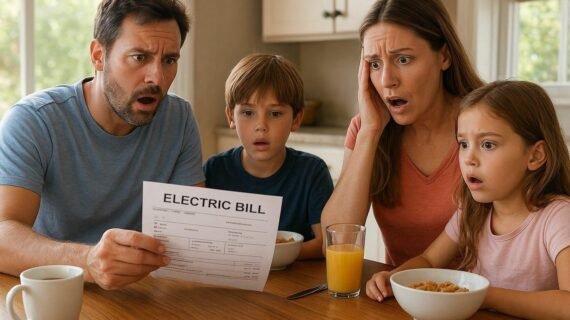
If you are struggling to keep up with your electricity bill in Florida, you are far from alone. Between scorching summers, rising utility rates, and the everyday pressures of a tight budget, thousands of Florida households face the very real threat of a disconnection notice every single month. The good news is that a surprising number of programs exist specifically to help — federal assistance, state-funded options, utility company emergency funds, and local nonprofit resources. This guide walks you through every major avenue for getting help paying your electric bill in Florida, who qualifies, how much you can receive, and exactly how to apply.
If you are also dealing with other financial pressures beyond your energy bill, our complete guide on what benefits you can get in Florida with low income covers every major program available to you in one place.
Quick Navigation
- LIHEAP: The Main Federal Program
- EHEAP: Extra Help for Seniors
- Utility Company Assistance Programs
- Local Nonprofits and 211
- Weatherization Assistance
- Who Qualifies? Income Limits Explained
- Documents You Will Need
- How to Apply Step by Step
- Tips to Avoid Disconnection While You Wait
- Frequently Asked Questions
Electricity is not optional in Florida. During peak summer months, indoor temperatures without air conditioning can become genuinely dangerous, especially for children, the elderly, and people with medical conditions. That is why state and federal governments, utility companies, and nonprofits all maintain dedicated funds to prevent shutoffs and help low-income households manage their energy costs. You just need to know where to look.
1. LIHEAP — The Low Income Home Energy Assistance Program
LIHEAP is the largest and most widely available program for getting help paying your electric bill in Florida. It is a federally funded program administered locally through community action agencies across the state. Florida Commerce oversees the distribution of LIHEAP funds to these local agencies, which then work directly with residents.
LIHEAP in Florida offers three distinct types of assistance:
Cooling Assistance
Available from April 1 through September 30, cooling assistance helps households manage the cost of running air conditioning during Florida’s brutal summer months. For FY 2026, the benefit ranges from a minimum of $400 to a maximum of $1,350, depending on your household income, size, and energy burden. The payment goes directly to your utility company — you never handle the money yourself.
Heating Assistance
Available from October 1 through March 31, heating assistance covers the cooler months. While Florida winters are mild compared to most of the country, older homes and mobile units can get unexpectedly cold, and heating bills can still spike. The benefit range for FY 2026 mirrors the cooling program: $400 minimum to $1,350 maximum.
Crisis Assistance
This is the most urgent option. Crisis assistance is available year-round for households facing an immediate energy emergency — meaning your electricity has already been shut off or you have received a disconnection notice. Eligible households can receive up to $2,000 within a 12-month period through crisis assistance. If your lights are already off or you have a final notice in hand, this is the program to call about first.
In FY 2024, LIHEAP in Florida served over 95,000 households across cooling, heating, and crisis programs combined. It is a well-funded, well-established program — but it operates county by county, so the process always begins locally.
How to apply for LIHEAP in Florida: Call 850-717-8450 to be directed to your local agency, or visit floridaliheap.com to check eligibility and apply online in many counties. Some counties also accept in-person applications at public libraries or community resource centers.
2. EHEAP — Emergency Home Energy Assistance for the Elderly
If you or a member of your household is 60 years of age or older, you may qualify for the Emergency Home Energy Assistance for the Elderly Program, better known as EHEAP. This Florida-specific program provides additional energy assistance beyond what standard LIHEAP offers, with a particular focus on preventing shutoffs for senior households.
EHEAP is especially useful because it can fill gaps when standard LIHEAP funds run out or when a senior household faces a crisis between LIHEAP eligibility periods. Eligibility requirements are similar to LIHEAP, but the senior age threshold of 60 is the key differentiating factor. Contact your local Area Agency on Aging or dial 211 to ask about EHEAP availability in your county.
Seniors who qualify for EHEAP often also qualify for Florida Medicaid’s long-term care programs. If that applies to your household, take a look at our guide to Florida Medicaid eligibility and income limits for 2026 to see what health coverage support may also be available.
3. Utility Company Assistance Programs in Florida
Beyond government programs, several of Florida’s major utility providers maintain their own emergency assistance funds funded by voluntary customer donations and company contributions. These programs can fill the gap when LIHEAP funds run low or when you need help faster than a government program can process.
Florida Power & Light (FPL) — Care to Share Program
FPL’s Care to Share Program is one of the most accessible emergency utility assistance options in the state. It provides up to $750 toward your FPL electric bill for customers who are in a genuine crisis and at risk of disconnection. You can only receive this benefit once in a 12-month period. FPL customers in Miami-Dade County apply through their local Community Resource Center; customers in other counties should call FPL directly or contact 211 to be screened for the program.
Tampa Electric — SHARE Program
Tampa Electric’s SHARE program uses funds contributed by customers to help neighbors in need cover basic home energy costs. To determine if you qualify as a SHARE recipient, call 211. Tampa Electric also partners with the Tampa Hillsborough Action Plan (THAP) to provide neighborhood weatherization services — including free energy-saving kits — to households earning at or below 200% of the federal poverty level. Preference is given to the elderly, disabled residents, and families with children under 12.
Duke Energy — Share the Light Fund
Duke Energy’s Share the Light Fund brings together customer contributions and company matching to assist individuals and families in Duke Energy service areas across central Florida who are struggling to pay their energy bills. Contact Duke Energy’s customer service line or call 211 to find out how to apply in your area.
City of Tallahassee Utilities — Project Share
Tallahassee Utilities’ Project Share provides one-time financial assistance payments to eligible customers. Funds are administered locally by the Capital Area Community Action Agency. Priority is given to seniors 65 and older, families with children under 5, and disabled persons during peak energy months. Contact the Capital Area Community Action Agency for current availability and application details.
Gainesville Regional Utilities — Project Share
GRU’s Project Share covers emergency energy-related costs including electric and gas bills and even the repair of vital heating or cooling equipment. Preference goes to applicants 60 and older or those who are disabled. Apply through the United Way of North Central Florida’s 2-1-1 helpline.
Kissimmee Utility Authority — Good Neighbor Utility Assistance Fund
This fund uses customer donations matched by KUA to help customers in emergency situations. Call 877-KUA-7700 for application details and current availability.
Lakeland Electric — Project Care
Project Care provides electric bill assistance specifically to Lakeland Electric customers who are 60 and older or disabled. Call 863-834-9535 for more information.
Florida Keys Electric Cooperative — Operation Roundup
FKEC’s Operation Roundup fund supports individuals, families, or organizations in the Keys with special financial needs. Each application is reviewed by a volunteer Board of Directors. Contact FKEC directly for application instructions.
Homestead Public Services — C.A.R.E.S. Program
The Homestead C.A.R.E.S. program provides eligible Homestead Public Services customers with up to $500 in credit toward their electric utility bill to prevent service disconnection. Applications are submitted online only through the City of Homestead’s official application portal. Call 305-224-4408 for assistance completing the application.
4. Local Nonprofits and 211
One of the most consistently underused resources for utility assistance in Florida is the 211 helpline. When you dial 211 from anywhere in Florida, you are connected with a trained information and referral specialist who can identify local assistance programs you may not have found on your own — including church-based emergency funds, community foundation grants, and local nonprofit utility assistance that isn’t widely advertised online.
Organizations like Catholic Charities, the Salvation Army, St. Vincent de Paul Society, and local community action agencies often maintain small emergency funds specifically for electric bill assistance. These funds tend to move quickly once available, so calling 211 regularly — not just once — is worthwhile if you are on a waiting list for LIHEAP or another program.
If you recently lost your job and that is the main reason your electric bill has become unmanageable, there may be additional financial support available to you. Our guide to Florida benefits for unemployed residents outlines every program you may be eligible for while you get back on your feet.
5. Weatherization Assistance — Lowering Bills for the Long Term
If your electric bill is consistently high because your home is poorly insulated or your appliances are inefficient, the federal Weatherization Assistance Program (WAP) may be one of the most impactful forms of help available to you. Rather than simply paying a portion of your current bill, WAP makes physical improvements to your home — things like sealing air leaks, adding attic insulation, upgrading to more efficient heating and cooling equipment, and replacing failing appliances — that can permanently reduce your monthly energy costs.
In Florida, WAP is supplemented through the State Housing Initiatives Partnership (SHIP) program and the Low-Income Emergency Home Repair Program. Eligible households with very low income may receive weatherization services completely free of charge. Contact your local community action agency or call 850-717-8450 to inquire about WAP availability in your county.
6. Who Qualifies? Income Limits Explained
Most electric bill assistance programs in Florida use your household’s gross monthly or annual income as the primary eligibility factor, compared against either the Federal Poverty Level (FPL) or the State Median Income (SMI). Here is a quick breakdown of the most commonly used thresholds:
| Program | Income Threshold | Household Size Matters? |
|---|---|---|
| LIHEAP (standard) | At or below 60% of State Median Income | Yes |
| LIHEAP (crisis) | At or below 60% SMI — immediate crisis required | Yes |
| EHEAP | At or below 60% SMI — must have member age 60+ | Yes |
| FPL Care to Share | Low income, FPL customer in crisis — no fixed limit published | Screened by caseworker |
| Tampa Electric Weatherization | At or below 200% FPL | Yes |
| WAP | At or below 200% FPL | Yes |
Priority in most programs is given to households that include elderly members (age 60+), individuals with disabilities, young children, or households with an especially high energy burden — meaning a large portion of their income already goes to utility costs. If you are also receiving Florida TANF cash assistance, that income is typically counted toward your household total when determining eligibility, so be sure to include it accurately on your application.
7. Documents You Will Need
Gathering the right paperwork before you apply can dramatically speed up the process and reduce the chance of your application being delayed or denied. For most electric bill assistance programs in Florida, you will typically need:
- Photo ID for all adults in the household (Florida driver’s license or state ID)
- Social Security numbers for all household members
- Proof of income for the past 30 days — pay stubs, SSI/disability benefit letters, unemployment documentation, or a self-employment statement
- Your current electric bill — ideally showing your account number and any past-due balance or disconnection notice
- Proof of residency — a lease agreement, mortgage statement, or utility bill in your name showing your address
- Birth certificates or proof of age for children and elderly household members if applying for programs with age-based priority
- If you receive Section 8 or public housing, bring your 50058 or 50059 form showing your utility allowance
If you are applying online, most portals now allow you to upload photos taken with a smartphone — just make sure the documents are clearly readable before submitting. If you use MyACCESS Florida for other benefits like SNAP, the document upload process is similar. Our step-by-step guide on how to upload documents through MyACCESS Florida can walk you through the process if you’re new to the system.
8. How to Apply for Electric Bill Help in Florida — Step by Step
- Check your utility provider first. Before applying for government programs, call your utility company and ask if they have a hardship or assistance program. FPL, Tampa Electric, Duke Energy, and many local utilities have their own funds that can move faster than LIHEAP.
- Call 211. Dial 211 from any Florida phone. The operator will screen you for multiple programs at once and connect you with the right local agency — saving you hours of research.
- Apply for LIHEAP online or in person. Visit floridaliheap.com to check eligibility and apply in many counties. If your county doesn’t use that portal, call 850-717-8450 to be directed to your local LIHEAP office.
- Request crisis processing if needed. If your electricity is already off or you have a disconnection notice, say so explicitly when you apply. Crisis cases are generally prioritized and can be processed faster than standard applications.
- Log into MyACCESS Florida to apply for related benefits. If you also need help with food or healthcare, the MyACCESS Florida portal lets you apply for SNAP, Medicaid, and TANF all in one session. If you already have an account, check our guide on how to check your application status in Florida to stay on top of your case.
- Follow up proactively. Once you’ve submitted an application, log back in or call to check your status. Applications can be delayed if additional documents are needed, and you may miss a request for information if you’re not actively monitoring.
9. Tips to Avoid Disconnection While You Wait
Assistance programs can take time to process — sometimes up to 30 days for standard LIHEAP. In the meantime, here are practical steps to protect your service while you wait:
- Call your utility company and ask for a payment plan. Most Florida utilities are required to offer low-income customers a deferred payment arrangement. They would much rather set up a payment plan than process a disconnection.
- Ask about budget billing. Many utilities offer budget or average billing programs that spread your annual cost evenly across 12 months, eliminating the summer spike that catches so many households off guard.
- Request a medical necessity hold if anyone in your household depends on electrically powered medical equipment. Florida law provides additional protections for customers in this situation.
- Reduce your consumption immediately. Set your thermostat to 78°F when home and 82°F when away. Use ceiling fans to make rooms feel cooler without dropping the thermostat. Run major appliances like dishwashers and washing machines in the early morning or late evening.
- Keep paying something. Even partial payments show good faith and can delay disconnection proceedings. If you’ve applied for assistance, let your utility company know — many will hold disconnection while a verified assistance application is pending.
If your household is also struggling with food costs while you wait for utility help to come through, you may qualify for emergency SNAP benefits in Florida. Check out our guide on how long SNAP approval takes in Florida to understand the timeline and what to expect.
Frequently Asked Questions
How quickly can I get help with my electric bill in Florida?
It depends on which program you use. Utility company programs like FPL Care to Share can sometimes issue assistance within a week. Standard LIHEAP applications are processed within 30 days. Crisis LIHEAP — for households facing immediate disconnection — is generally prioritized and can move faster. Calling 211 and explaining your urgency will help you get pointed to the fastest available option.
Can I get help with my electric bill if I rent an apartment?
Yes. You do not need to own your home to qualify for LIHEAP or most other electric bill assistance programs. Renters and homeowners are both eligible. If your electricity is included in your rent, however, you may not qualify for direct bill payment — contact your local agency to discuss your specific situation.
What if I was denied for LIHEAP?
You have the right to appeal a LIHEAP denial. Request an appeal form from your local LIHEAP office — the review process takes up to 15 working days. In the meantime, explore utility company programs and nonprofit options through 211, as those have separate eligibility criteria and may approve you even if LIHEAP did not.
Does applying for utility assistance affect my other benefits?
Generally, no. LIHEAP assistance is not counted as income for purposes of other federal benefit programs like SNAP or Medicaid. However, if you have concerns about your specific situation, it is worth confirming with the agency that administers the benefit you’re worried about.
Can I apply for multiple programs at the same time?
Yes, and in most cases you should. LIHEAP, utility company programs like Care to Share, and local nonprofit emergency funds all operate independently. Receiving assistance from one does not necessarily disqualify you from another, though some programs have 12-month limits on repeat assistance. Applying to several sources simultaneously gives you the best chance of getting help quickly.
What if my income is slightly above the LIHEAP limit?
If your income is just above the LIHEAP threshold, don’t give up. Utility company hardship programs often have more flexible income criteria than LIHEAP. Local nonprofits and community action agencies also sometimes have funds with different eligibility standards. Calling 211 is the best way to identify options that fit your specific income level. You can also review our breakdown of Florida income limits across major assistance programs to see which ones you may still qualify for.
The Bottom Line: Help Is Available — Start Today
Getting help paying your electric bill in Florida is absolutely possible, but it requires taking the first step. Between LIHEAP, utility company emergency funds, nonprofit programs, and weatherization assistance, there are more options available than most people realize. The biggest obstacle is usually not eligibility — it’s simply not knowing what’s out there or waiting too long to ask.
If your electric bill is already overdue or you’re staring at a disconnection notice, do not wait. Call 211 right now, or visit floridaliheap.com to start your application. If your utility is FPL, call their customer service line and ask specifically about Care to Share and payment arrangement options. Every day you wait is a day closer to a shutoff that could have been prevented.
And if utility bills are just one piece of a larger financial puzzle, our complete guide on all benefits available to low-income Floridians is the best place to start building a full picture of the support you qualify for.
Florida’s heat is relentless. But so are the resources available to help you keep your power on. You just have to reach for them.
Disclaimer: Program details, benefit amounts, and income limits are subject to change. This article reflects information available as of May 2026. Always verify current details directly with the administering agency before applying.